Garage Door Installation in Jacksonville, FL
A new garage door installation in Jacksonville runs $700–$2,200 depending on door size, material, and whether your coastal ZIP code requires corrosion-resistant hardware upgrades — which, in this market, it almost always does. Stephanie Cox and her team at Priority Garage Door Solutions Jacksonville have been handling exactly these installs for seven years, and they know the difference between a door that holds up in Mandarin and one that corrodes out in Atlantic Beach inside three years. Call (386) 463-9742 for a free, no-pressure estimate.
Why Priority Garage Door Solutions Jacksonville Is Jacksonville’s Preferred Garage Door Installation Company
Our Garage Door Installation team is built around one principle: the person whose name is on the business is also the expert arriving at your door. Stephanie Cox isn’t a dispatcher coordinating a revolving crew — she’s the lead technician on the job, which means every decision made on your installation, from spring spec to weather-seal grade, is made by someone who is accountable to her own name and her own reputation in Jacksonville.
238 Jacksonville homeowners have reviewed our work and left a 4.9-star average. That’s not a handful of cherry-picked testimonials — that’s a consistent real-world track record across neighborhoods from the Beaches to Riverside to the Southside. We’ve earned it by showing up when we say we will and installing doors that are actually specced for the environment they’ll live in.
Seven years in this trade — one trade only — means Stephanie has seen every way Jacksonville’s climate punishes a garage door that wasn’t installed correctly for this market. That depth matters when you’re making a decision that should last 20 years, not three.
Our Garage Door Installation Services in Jacksonville
New Door Installation
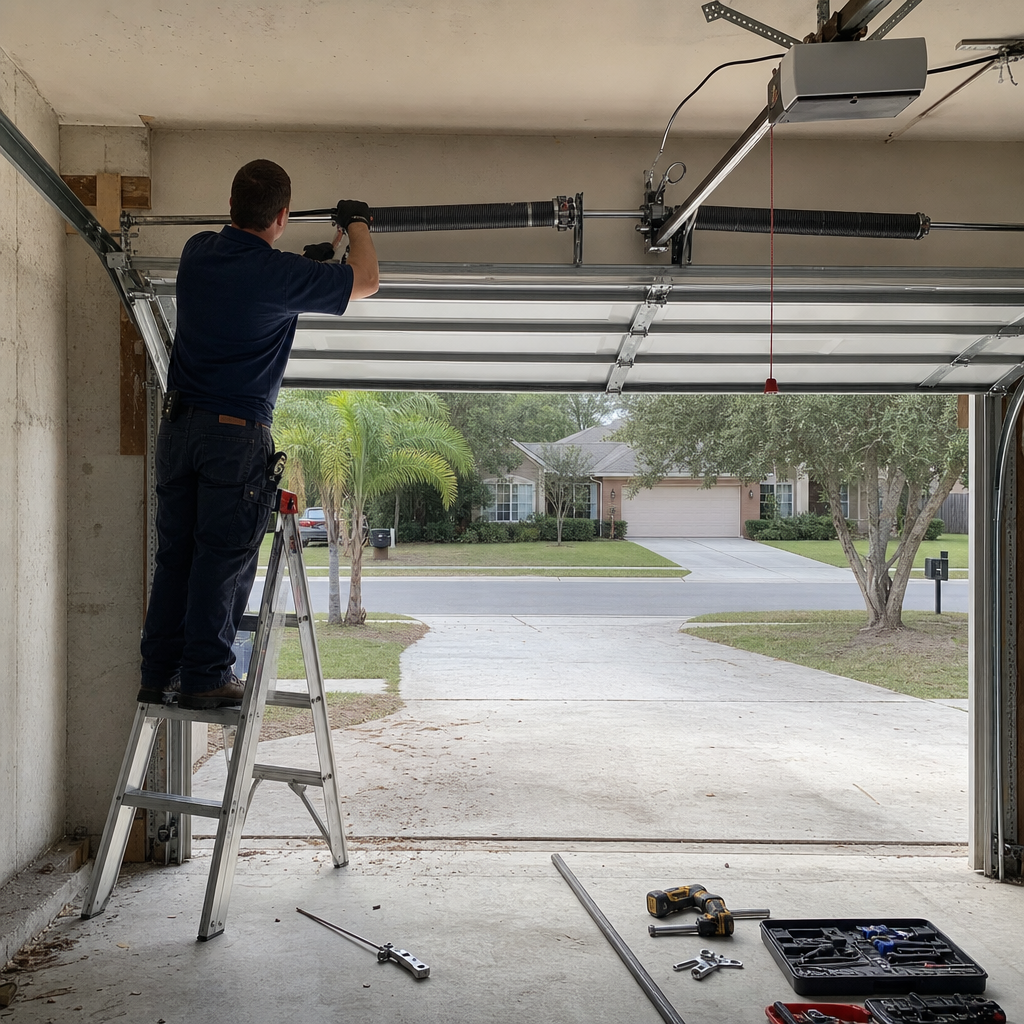
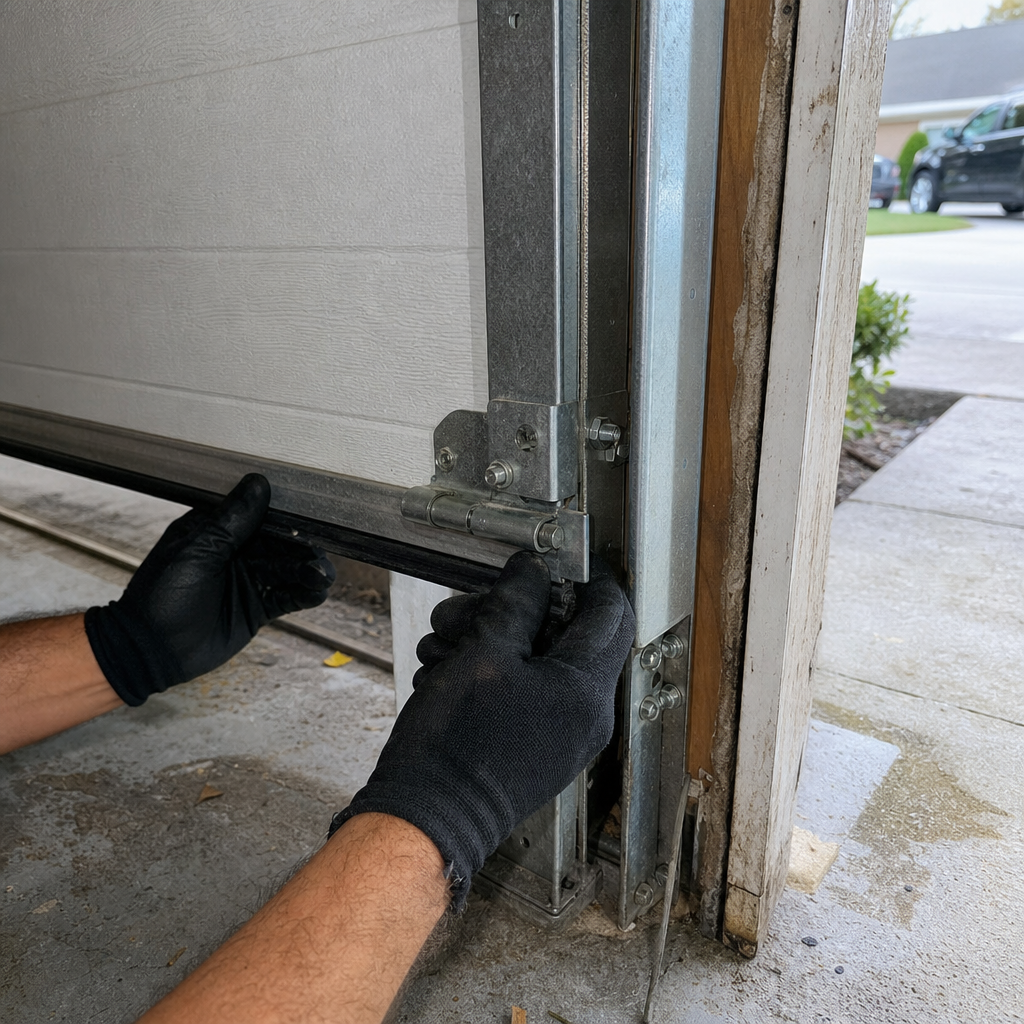
A full new door installation in Jacksonville isn’t just a product swap — it’s a spec decision. Because of the city’s salt-air exposure and Florida Building Code wind-load requirements triggered by storms like Matthew (2016) and Dorian (2019), nearly every installation we do involves a corrosion-resistance conversation and a wind-rating compliance check. We install steel and wood doors rated for Jacksonville’s hurricane exposure zone, and we don’t consider the job done until the bottom seal, track fasteners, and spring hardware are all matched to what the environment actually demands here.
Single Car Door Installation
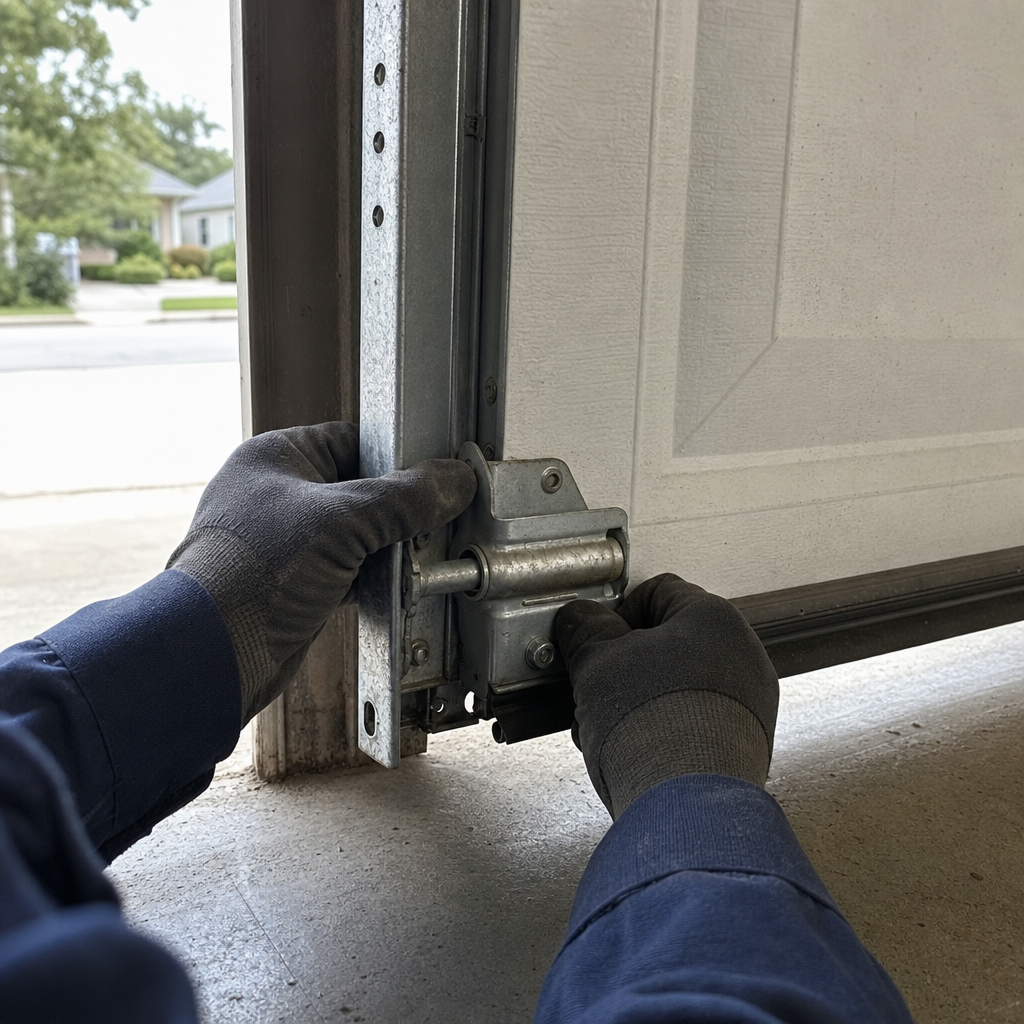
Single-car doors in Jacksonville’s older in-town neighborhoods — Riverside, San Marco, and parts of Ortega — often require custom rough-opening measurements because carriage-house garages from the 1940s and 1950s weren’t built to today’s standard dimensions. We take those measurements on-site before anything is ordered. A typical single-car installation in Jacksonville runs on the lower end of the $700–$2,200 range, with the final figure shaped by material, insulation, and hardware grade.

Double Car Door Installation
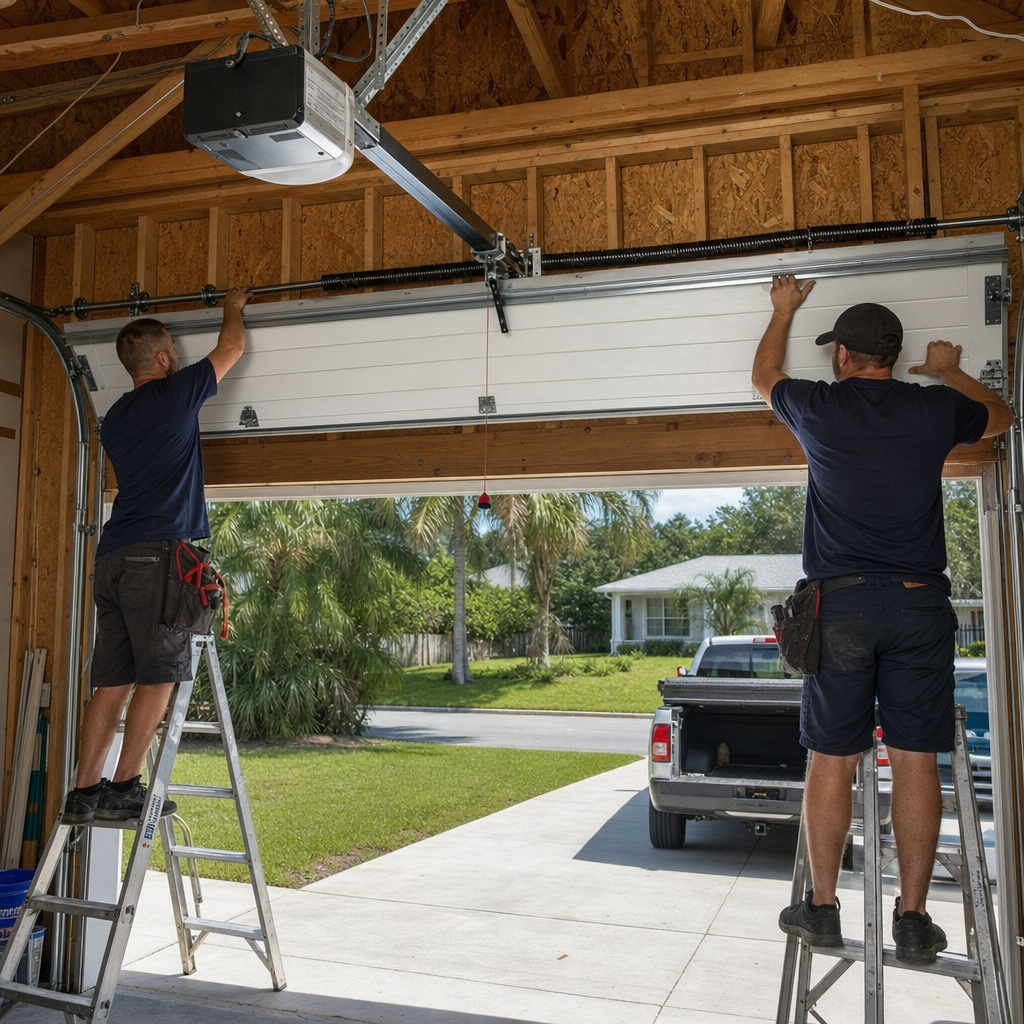
Double car doors are the standard on the enormous tract-home inventory Jacksonville built across the 1980s and 1990s — Mandarin, Southside, and the Westside are full of attached two-car garages that are now carrying 30-to-40-year-old original doors. When those doors finally go, homeowners have a real decision to make about material and wind rating. We walk through the options honestly, including what a galvanized spring package adds to longevity in this market, because replacing the hardware again in four years costs more than doing it right the first time.
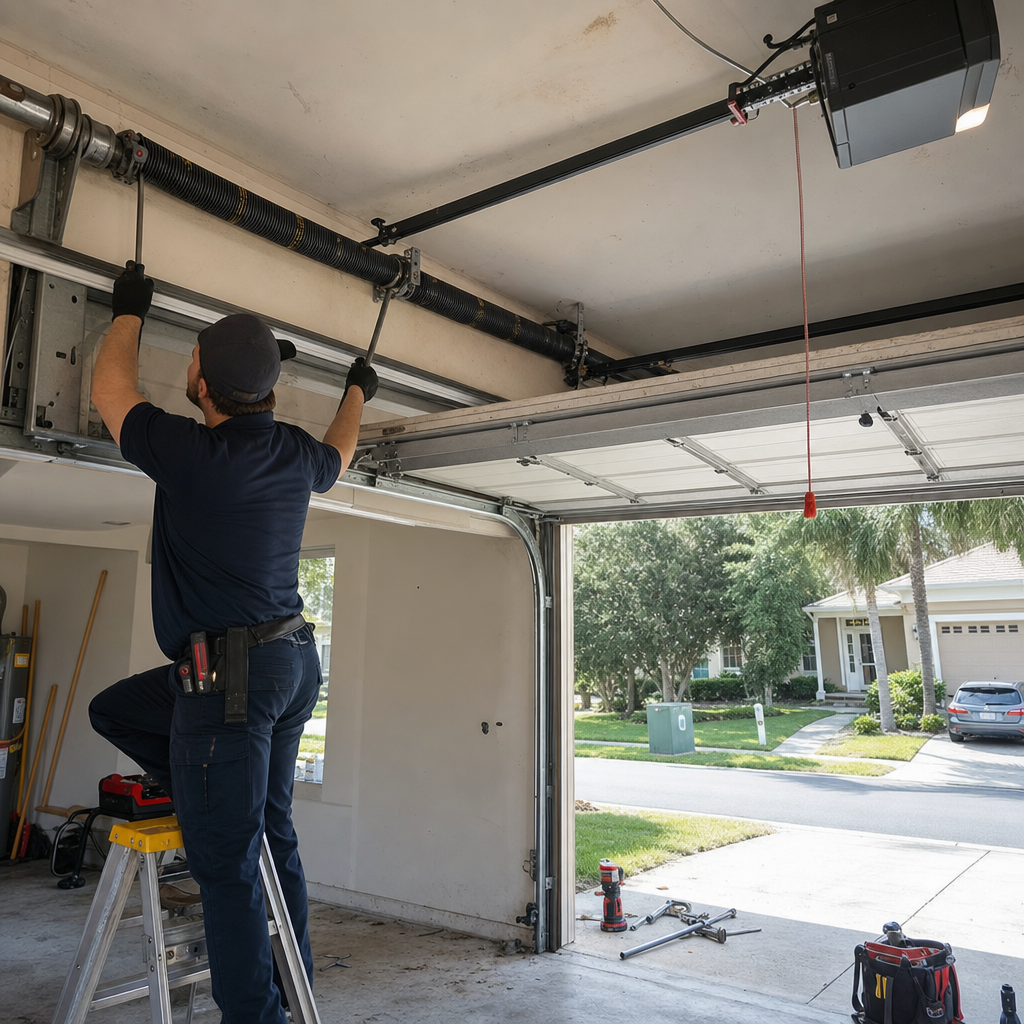
Custom Garage Door Installation
Custom sizing is more common in Jacksonville than most markets. Older in-town properties in Riverside and San Marco have detached garages or carriage-house conversions that require non-standard door widths and heights. We measure, source, and install custom doors from brands including Clopay, Amarr, and Wayne Dalton — whichever fits the opening, the architectural style, and the homeowner’s budget. No guessing on dimensions. Everything is measured twice before we order.

What happens when you call
- 1
A real person answersNo phone trees — you reach a local pro.
- 2
You get an upfront price rangeHonest numbers before anyone is dispatched.
- 3
A background-checked tech heads outLicensed & insured, dispatched right away.
- 4
You approve before work beginsNothing starts until you say go.
Trusted Brands We Service in Jacksonville
Stephanie and her team are trained and equipped to install and service eight major brands: LiftMaster, Chamberlain, Genie, Clopay, Amarr, Wayne Dalton, Craftsman, and Raynor. Whatever system your Jacksonville home has — or whatever new door you’re considering — we can work with it. For Jacksonville customers, we keep common replacement parts on hand rather than waiting on special orders, which matters when a door is stuck open and the forecast calls for afternoon storms. Whatever brand you have, we’re not starting from scratch figuring it out.
Common Garage Door Installation Problems We See in Jacksonville Homes
- Salt-air corrosion of torsion springs and track fasteners: In coastal ZIP codes like Atlantic Beach and Neptune Beach, uncoated torsion springs commonly corrode through in three to five years rather than the seven to ten you’d expect inland. The salt air off the Atlantic doesn’t stop at A1A — it travels inland along the St. Johns River estuary and hits properties in Arlington and the Northside too.
- Warped and rusted panels on aging steel and wood doors: Jacksonville’s subtropical humidity — consistently above 80% relative humidity from May through October — accelerates rust on uncoated steel panels and causes wood doors in neighborhoods like Riverside and San Marco to warp and swell seasonally. Once the door is binding in its tracks, a full replacement is usually the durable fix; repeated repairs on a door in that condition chase the problem rather than solve it.
- Flood-damaged bottom seals and track bases in low-lying areas: Parts of Arlington, the Northside, and Ortega sit low enough that track bases and bottom weather seals take on standing water during heavy rain events. That repeated exposure corrodes hardware from the ground up, and standard rubber bottom seals deteriorate far faster than flood-rated alternatives designed for this kind of exposure.
- Undersized or non-standard openings in older in-town garages: Pre-1980 properties in Riverside, San Marco, and parts of Avondale often have garages built before standard residential door dimensions were codified. Original doors on these homes were frequently custom-sized, and replacement requires on-site measurement — not a catalog order based on assumed dimensions.
A Field Example From Mandarin
We were called to a 1991-built home in Mandarin whose original steel torsion spring had seized solid after just four years — not the timeline you’d expect from an inland property. But this home sat close enough to the St. Johns River estuary that salt-laden humidity had worked through the uncoated spring coils well ahead of schedule. We replaced the door with a wind-rated Clopay steel door carrying a galvanized spring package and nylon rollers, then verified bottom-seal integrity against the low-lying yard that had taken on standing water the previous wet season. Four years later, that door is still running clean.
Jacksonville’s Coastal Environment and Your Garage Door: What Actually Fails First
This is the part most installation pages skip over, so we’ll say it plainly: Jacksonville’s garage door environment is materially different from anything in Central Florida, and the installation spec needs to reflect that.
The beachside communities — Atlantic Beach, Neptune Beach, and Mayport — sit directly in the path of salt air off the Atlantic. That salt doesn’t stay at the coast. The wide St. Johns River estuary acts as a channel that pushes salt-laden air miles inland, which is why corrosion damage that looks like a “beach problem” shows up in Mandarin, Arlington, and the Northside. The components that go first are torsion springs, then roller bearings, then track fasteners and hinge hardware — in that order. An uncoated torsion spring in a coastal ZIP code can lose structural integrity in three years. The same spring installed inland near the Westside might run eight to ten years.
Florida Building Code adds another layer. Jacksonville’s hurricane exposure — Matthew came close in 2016, Dorian tracked directly past in 2019 — means that door replacement here almost always involves a wind-rating compliance check. A door that doesn’t meet the code wind-load requirement for this area isn’t just a performance problem; it’s a homeowner’s insurance issue. Stephanie verifies wind ratings on every new installation because it’s part of the job in this market, not an optional conversation.
On any installation we do near the coast, galvanized or stainless-steel spring packages are standard, not an upgrade. Nylon rollers instead of steel. Coated or stainless track hardware where the budget allows. Flood-rated bottom seals on any property with a low-lying yard or a history of standing water. This isn’t upselling — it’s the spec that keeps a door running for 15 years in Jacksonville instead of five.
Pricing for Garage Door Installation in Jacksonville, FL
Here’s what installation work actually costs in the Jacksonville market. These are real ranges — not teaser prices designed to get you on the phone before the number doubles.
| Service | Jacksonville Price Range |
|---|---|
| New Door Installation (single or double) | $700–$2,200 |
| Spring Repair / Galvanized or Stainless Upgrade | $180–$340 |
| Roller Replacement (coastal-grade nylon) | $110–$220 |
Within the new door range, a basic single-car steel door with standard hardware sits toward the lower end. A double-car insulated steel door with a wind-rated panel and galvanized hardware package sits toward the upper end. Custom sizing, wood door material, or a high-end carriage-house design moves the number accordingly. Estimates are free — call (386) 463-9742 and Stephanie will give you a real number before any work starts.
Serving Jacksonville, FL — Our Local Coverage Area
We’re based in the Jacksonville area and know this community well. Use the map below to see our service coverage — if you’re nearby, we can almost certainly help.
FAQs — Garage Door Installation in Jacksonville
Salt air is the direct cause. Gainesville sits roughly 75 miles inland with no coastal exposure, so its garage door hardware lives in a relatively mild environment. Jacksonville Beach sits directly on the Atlantic, and the salt-laden air accelerates corrosion on uncoated steel torsion springs from the day they’re installed — commonly reducing a spring’s service life from seven to ten years down to three to five. The fix is a galvanized or stainless-steel spring package specified for coastal exposure. On any installation we do near the Beaches communities, that’s the baseline spec, not an optional add-on. Call (386) 463-9742 to talk through the right spring package for your address.
Yes, Florida Building Code requires garage doors in Jacksonville to meet wind-load performance standards given the city’s hurricane exposure zone. After Matthew (2016) and Dorian (2019) demonstrated exactly how directly this area can be affected, enforcement and homeowner awareness around wind ratings have both increased. A door that doesn’t meet the applicable wind-load requirement can create a homeowner’s insurance compliance issue, not just a structural one. Stephanie verifies wind ratings on every installation we do in Jacksonville — it’s part of the spec conversation, not something you have to ask for separately.
An original door from the 1980s on a Southside home is now 35 to 40 years old, which puts it well past the service life of its springs, rollers, hinges, and panel structure. In most cases, the honest answer is that continued hardware repair on a door that old is chasing a failure loop — one component gets fixed and the next one goes. If the panel structure is still intact and the door is aligned, selective hardware replacement can buy time. If the panels are dented, rusted, or warped, a full replacement is the more cost-effective path. We’ll tell you which situation you’re actually in when we look at it. Call (386) 463-9742 for an honest on-site assessment.
Yes — non-standard openings in Riverside are something we handle regularly. Pre-1960s detached garages and carriage-house conversions in that neighborhood were built before standard residential door dimensions were common, and replacement almost always requires on-site measurement rather than a catalog-order approach. We measure the rough opening precisely, then source a door from brands like Clopay, Amarr, or Wayne Dalton that fits the actual dimensions and suits the architectural character of the home. Nothing is ordered until the measurements confirm the fit. Call (386) 463-9742 to schedule a measuring visit.
Ask specifically for a flood-rated bottom weather seal and corrosion-resistant track hardware at the base of the door. In flood-prone areas of Arlington, the Northside, and Ortega, standard rubber bottom seals and uncoated track bases take on standing water repeatedly, and the hardware corrodes from the ground up faster than almost anything else on the door. A flood-rated bottom seal is designed to handle that exposure. We also check track base fasteners and recommend stainless or galvanized hardware at ground level on any low-lying property. Getting those specs right during the installation prevents the same corrosion failure from recurring on the new door. Call (386) 463-9742 for a free estimate that accounts for your property’s specific conditions.
Reviewed by Stephanie Cox, Owner & Lead Technician at Priority Garage Door Solutions Jacksonville, serving Jacksonville, FL since 2018.